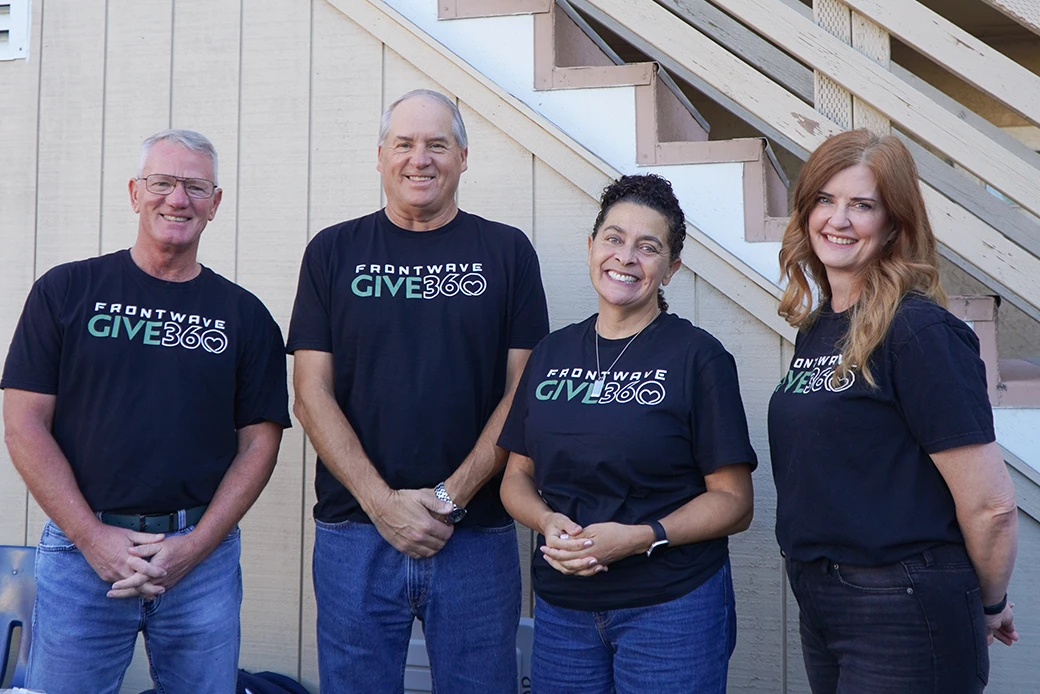
Showing Up for Our Communities
Through Frontwave Give360, we support local organizations and causes that strengthen the communities we call home.
Through Frontwave Give360, we support local organizations and causes that strengthen the communities we call home.
Use the value you've built to renovate, consolidate, or fund what's next.
Lending options tailored for hardworking business owners like you.
Insights on money, life, and the communities we serve.
Turning compassion into action through grants, scholarships, and support for local nonprofits.

Not every loan works the same way, and the differences matter more than people realize.
Some loans are backed by collateral. Others are approved mostly based on credit, income and borrowing history. The type of loan affects everything from approval odds to interest rates to what happens if payments become difficult later.
And when money already feels tight, those details matter.
A secured loan is backed by collateral. In other words, the lender has something helping secure the loan if payments stop.
Auto loans are one of the most common examples. The vehicle helps secure the loan, which means the lender can repossess it if the loan goes unpaid.
With a secured personal loan, the collateral usually looks different. Frontwave Members can often use funds already deposited in a savings account to help secure the loan instead.
Here is a simplified example of how that can work. If someone takes out a $1,000 secured loan, the lender holds the $1,000 in savings as collateral while the loan is being repaid. As payments are made, portions of those secured funds gradually become available again until the loan is fully paid off. Actual payment amounts, interest and fees will vary based on the loan terms.
That setup can help some borrowers qualify more easily, especially people rebuilding credit or trying to avoid higher-rate borrowing options. It also gives borrowers access to funds without fully draining savings upfront.
An unsecured personal loan is not backed by collateral. Frontwave calls unsecured personal loans Signature Loans because approval is based mostly on creditworthiness, income and the borrower’s promise to repay the loan.
Because there is no collateral attached, unsecured loans may:
But unsecured loans also avoid tying savings or other assets directly to the loan itself.
Some borrowers may prioritize lower rates or stronger approval odds. Others may prefer not to tie savings directly to a loan. The better fit usually comes down to the monthly payment, the repayment timeline and how the loan fits into the rest of the budget.
The biggest difference comes down to risk. Secured loans reduce risk for the lender because collateral helps back the loan. That lower risk can sometimes mean:
Unsecured loans carry more risk for the lender, which is why approval standards are often tighter.
But the bigger question is not just whether someone qualifies for the loan. It is whether the payment will still fit comfortably into the monthly budget six months from now, not just today.
People sometimes compare personal loans and credit cards because both involve borrowing money. But they work very differently once repayment starts.
Personal loans are a type of installment debt. The borrower receives the money upfront and repays it over a set timeline with fixed monthly payments. That structure creates a defined payoff path from the beginning.
Credit cards work more like revolving debt. Available credit opens back up as balances get paid down, and monthly payments can change depending on the balance and interest charges. There is no fixed payoff date unless the balance is actively being paid down.
That flexibility can help in the short term, but it can also make balances easier to carry longer than expected, especially when only minimum payments are being made month after month.
Personal loans usually offer more structure and predictability. Credit cards offer more flexibility. The better fit depends on why the money is needed, how repayment will work and how much room already exists in the monthly budget.
The right loan depends on what someone needs, how quickly they need access to funds and what the monthly payment will realistically look like alongside everything else already competing for the paycheck.
If you are not sure which option makes the most sense, Frontwave can help walk through the differences and explain what may fit best based on your situation.
Call 800.736.4500, stop by a branch or schedule an appointment to learn more.
Internet Explorer is no longer supported by Microsoft. Please update to Microsoft's latest browser Microsoft Edge. Please note that even Microsoft's website cannot well-support this browser. Navigating to the link in this message will result in you being directed to a "Download Microsoft Edge" page with license terms and an "Accept and download" button.
You are leaving the Frontwave Credit Union website. External third-party web sites will be presented in a new and separate content window. Frontwave Credit Union does not provide, and is not responsible for, the product, service, overall website content, accessibility, security or privacy policies on any external third-party sites.