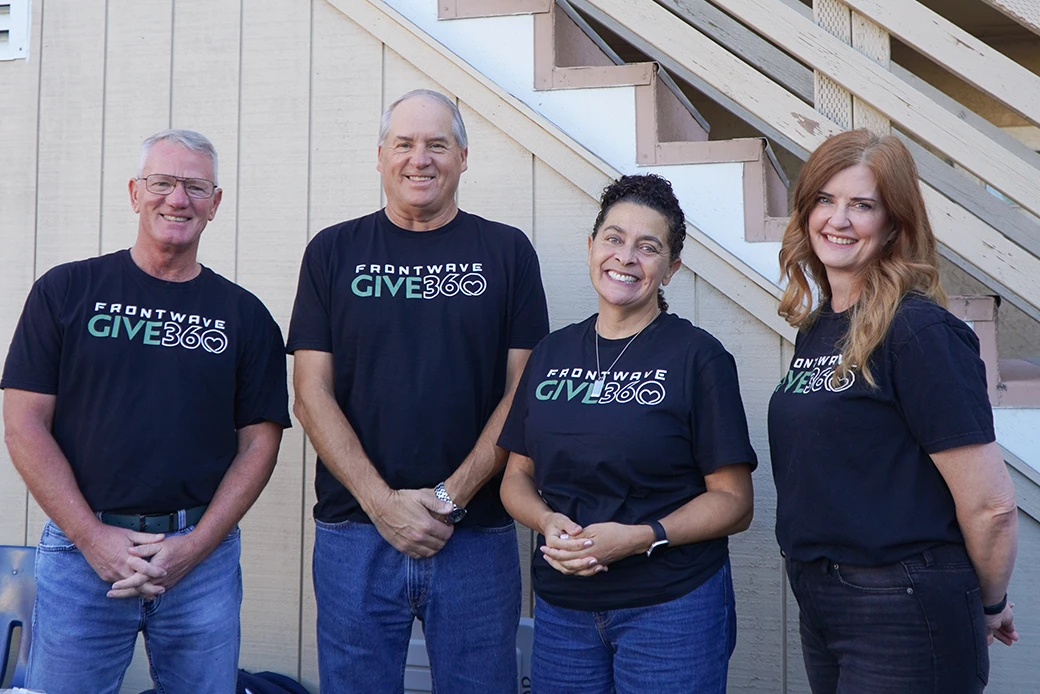
Showing Up for Our Communities
Through Frontwave Give360, we support local organizations and causes that strengthen the communities we call home.
Through Frontwave Give360, we support local organizations and causes that strengthen the communities we call home.

Use the value you've built to renovate, consolidate, or fund what's next.
Lending options tailored for hardworking business owners like you.
Insights on money, life, and the communities we serve.
Turning compassion into action through grants, scholarships, and support for local nonprofits.

I love hearing from our Members! But lately, one common theme is increasingly raising its ugly head: FRAUD!
It used to be a lot easier to spot a scam. You’d get a poorly written email with misspelled words, a strange message from someone you don’t know, or something telling you that a family member is in danger and needs immediate funds.
Today, it’s different. Scammers are using Artificial Intelligence (AI) to write texts and emails that look a lot like they came from Frontwave. They even spell all the words right! They can spoof phone numbers. They can even imitate voices. The old red flags aren’t always as obvious anymore.
Yup, these scams are getting harder and harder to spot. They look real. They sound real. I wish I could tell you people are overreacting, but they’re not. The fraudsters are getting much better at their craft. Most insidious to me is that they are taking advantage of your trust and scaring you into taking immediate action.
I’m going to go into my Sergeant Major mode for a moment…
If someone calls claiming to be from the Frontwave Fraud Team or a company working on our behalf, HANG UP! I promise, we won't be upset. Then call us directly at 800.736.4500, call the number on the back of your debit or credit card, or visit FrontwaveCU.com.
If you receive a text or email asking you to take immediate action to stop fraud or anything else that doesn't sound right, DO NOT RESPOND! DON'T CLICK ANY LINKS! Instead, contact us directly at 800.736.4500, use the number on the back of your card, or visit FrontwaveCU.com.
Today's fraudsters are very good at what they do. That's why even careful, smart people can get caught off guard. Many of these scams begin with someone pretending to be Frontwave or another organization you trust. They'll claim there's suspicious activity on your account and pressure you to right away.
They may know your name. They may know a few personal details. They may even make it look like the call, email, or text is coming from Frontwave. Other times, the number may be unfamiliar. Either way, caller ID alone isn’t enough to tell you who’s really on the other end.
Then they turn up the pressure. They may tell you to move money to a so-called “safe account.” They may send you a fake login link and ask for your username, password, or one-time security code. Once they have that information, they can move fast.
Some scammers will even try to cut you off from us. They may say Frontwave employees are involved or warn you not to call us. That’s a huge warning sign. The last thing they want is for you to check with us directly, because once you do, the scam usually falls apart.
What Frontwave will never do
Frontwave will never ask you to move money to a “safe account,” withdraw cash to protect it, or keep a transaction secret. We will never call, text, or email you asking for your online banking username, password, PIN, one-time security code, or full debit or credit card number. And we will never send you a link asking you to log in or verify your account. If someone says they’re from Frontwave and asks for any of that, it’s a scam. Hang up. DO NOT respond to the text or email. Call us directly.
If something doesn’t feel right, don’t take the chance. Remember, caller ID, email addresses and links can all be spoofed. The safest way to reach Frontwave is by using contact information you already know is ours.
Every day, our teams help Members sort through suspicious activity and respond to fraud attempts. They’re supported by strong security systems and monitoring tools that work around the clock, looking for activity that doesn’t fit normal patterns. When something gets flagged, our teams take a closer look and decide what needs to happen next.
Those tools are important, but they can’t always tell when someone is being pressured into approving a transaction. That’s where your awareness makes a big difference. The more you know about how these scams work, the easier it is to spot the warning signs before money or personal information changes hands.
What you should do
Taking a minute to verify doesn’t mean you trust us less. It just means you’re making sure the person contacting you is actually from Frontwave.
If someone says they’re from Frontwave and asks you to share personal information, move money, or do anything that feels rushed or unusual, hang up. Then call us using the number on the back of your debit or credit card or the number listed on our website.
We won’t be offended if you hang up to protect yourself. In fact, we’ll be glad you did. That small pause could save you money, protect your peace of mind, and keep a bad situation from getting worse.
If you want to learn more about today’s scams and how to protect yourself, visit our Security Center at frontwavecu.com/security. You’ll find practical tips, current fraud trends, and resources to help you stay one step ahead.
Fraudsters are urging you to move fast. We’re asking you to slow down, check first, and let us help. That one simple step can make all the difference.
Thank you for trusting us.
Bill Birnie
President & CEO
Frontwave Credit Union
Internet Explorer is no longer supported by Microsoft. Please update to Microsoft's latest browser Microsoft Edge. Please note that even Microsoft's website cannot well-support this browser. Navigating to the link in this message will result in you being directed to a "Download Microsoft Edge" page with license terms and an "Accept and download" button.
You are leaving the Frontwave Credit Union website. External third-party web sites will be presented in a new and separate content window. Frontwave Credit Union does not provide, and is not responsible for, the product, service, overall website content, accessibility, security or privacy policies on any external third-party sites.